
Showing posts with label Crime. Show all posts
Showing posts with label Crime. Show all posts
Sunday, 11 May 2014
Joe Mather: Editor of BBC Crimewatch
Crimewatch Editor, Joe Mather speaks about the production of the Live shows and how their appeals aim to help the police solve unsolved crimes in the UK. As well as discussing his responsibilities as the Editor, he explains what qualities he would look for in someone aspiring to join the Crimewatch team.

Eric Allison: Prisoner to Prison Correspondent

“In prison I used to get put in segregation for saying my piece and yet here I am giving you my comments and my thoughts and getting paid.”
Eric Allison, 71, spent around 16 years behind bars all for theft
related offences. In 2003, he applied for the job as the Guardian’s Prison
Correspondent with a criminal record for a CV. In the past decade, he
transformed his life from a prisoner to a prison reporter.
As a young boy, aged 11, Allison got his
first conviction for housebreaking on his criminal record, and three years on,
at 14 he was given his first custodial sentence.
I was always pretty anti-authority; if somebody told me
to do something I would go out of my way to not do it. I was very rebellious. I wasn’t very happy as a child. I had quite a
bad stammer and a squint in my eye, and I used to get a lot of name calling and
I would fight them. I was always fighting as a kid, and I stopped going to
secondary school. I was away from school far more then I attended.
I ran away
from home and broke into a day nursery to sleep. I was caught and put on
probation and when I was 14 years old I breached that probation because I stole
a chewing gum machine. I was sentenced at the juvenile court in Manchester and
two police officers took me down to Foston Hall detention centre, on the border
of Staffordshire and Derbyshire. It was December and it was dark when we got
there, it was a big sort of gloomy Victorian building with barbed wire fence
round. We went into the reception area and this guy told me to stand on the
white line and give my name, I said “Eric Allison” and I was going to say “Sir”
but because of the stammer the Sir wouldn’t come out. The guy just walked
across me, clenched his fist and punched me really hard across the face. I was
so frightened because I thought if he could assault me in front of two police
officers, what were they going to do when the police were gone? I was terrified
so much that I wet the bed in the cell that night. They put me in a dormitory
with other kids who wet the bed and they used to wake us up every hour to go to
the toilet whether we wanted to or not. We were knackered because it was run on
the military lines. You’d never stop.
“You
wouldn’t let the system beat you”
The
detention centre was meant to be a short sharp shock. The idea was to frighten
the life out of us so we wouldn’t come back, and of course it didn’t work. This
comes back to the defiance, you start sticking together and it becomes us
against them or them against us and you become determined not to let them win.
You wouldn’t let the system beat you.
I’ve been
locked up with murderers, terrorists, rapists and psychopaths. You name it,
even gangsters. I’ve seen a lot of examples of prisoners behaving badly towards
one another, but if I was to list the worst twenty acts in humanity that I have
ever seen in prison, not one of them in the top twenty would be carried out by
a prisoner. I’ve seen six or seven prison officers beat people to pulp, with sticks,
and I have had it, I’ve been beaten and batten myself. There had been times
when I thought: “These bastards are going to kill me.”
“I got a buzz out of it”
Not many
days would go by when I didn’t commit a crime. I loved the excitement; I got a
buzz out of it. I miss that excitement even now. It was never about the money,
it was actually the taking part. The buzz… I got a buzz from it without a
shadow of a doubt.
Around 1968,
I was sent to Strangeway’s prison for 4 and a half years, this was the longest
time I spent away in one go because I lost all the remission I may have got for
good behaviour. In the 60s, it was a stinking place, all the “slopping out”
because there was no in-cell sanitation then, everything was lousy, visiting was
lousy, the staff were lousy too; there were a lot of bullies, a lot of thugs. I
spent a long time in segregation.
On April fool’s day 1990, a time where
Allison was at liberty, a riot broke out in Strangeway’s Prison. The protest lasted
25 days, the biggest in British Penal History.
 |
| Prisoners protesting on the roof at Strangeways Prison |
I took a
loud-hailer down with me most days, and I was shouting up to them on the roof
and I was talking to people, all of the press that were there, I was telling
them what was wrong with the place. I just felt quite emotional; they did
something that we had never managed to do. I was elated for them, but also
concerned because I knew the ring leaders would pay a very heavy price and so
they did.
In 1996 Allison was sent back to Strangeway’s
prison, he was sentenced to seven years for scamming £1 million from Barclay’s
bank. This was the last time he was in jail, serving just over 3 years.
When I went
back in the 90s everything had changed, but the biggest change was the attitude
of the staff; all the thugs had gone. I had my own moral boundaries that I
wouldn’t cross in crime. I thought in a way I’ve
always been a good criminal, but when the system is cruel and unjust then
the criminal becomes the victim.
Freedom is a
funny thing, I came out just at the millennium but even now I get feelings, and
I visit prisons quite a lot so it still takes me back. Prison changes you…It’s
a bit like, you know, you….you sort of get solitude…
The first
time I was in a cell on my own it was very lonely, and I found the loneliness
quite difficult. You make a virtue out of a necessity and I began to embrace
loneliness then. I find it difficult to live with people. I’m much better off
living alone. I think prison has a lot to do with that.
My eldest
girl was at University while I was away and she had told me that somebody would
say “What does your dad do? – “Oh my dad’s a thief” - but having got
the job she says “my dad writes for the
Guardian”. That was a good moment in my life.
I always
enjoyed writing; it was always the one thing I was good at in school. I like
words and I got my education in prison. The Guardian advertised for the
position and I applied for the job. They wanted a 500 word essay and a CV, but
my CV was all prison and crime. I never thought for one second that I would get
the job; I didn’t even think that I wanted it. I just thought I would tell them
what was wrong with the prison system.
I couldn’t type;
I didn’t know one end of the computer from the other. I had to start absolutely
from scratch. When they said the jobs yours I had to go away and think about it.
I just knew it would be a massive change. I can’t remember when I didn’t steal…
I was five or six when I started nicking stuff, I was quite frightened by the
idea of being a straight go-er and even now I feel like a bit of an imposter
sometimes.
This will be
my eleventh year at the Guardian now, sometimes it seems as if I have been here
all my life and other times it feels like I’ve just arrived. Occasionally I do
stuff for ‘Comment is Free’ and they’re always very apologetic it’s only 90
quid, but I say, “Are you kidding?”
In prison I used to get put in segregation for saying my piece and yet here I
am giving you my comments and my thoughts and getting paid…it’s odd.
A version of this article has been published on The Justice Gap, a trade magazine on the law and justice. Click here.
Sunday, 4 May 2014
Justice must not only be done; it must be seen to be done
Court reporters are
usually huddled in the press box, with their notebooks in hand and 100wpm shorthand
under their belt, but now with the exception of certain cases, they can rely on
one video-journalist to capture the proceedings live from inside the
courtroom.
Since 1925, cameras have
been banned in courtrooms in England and Wales, and journalists have lived by
their mantra of being ‘the eyes and ears
for the public’. This ban was lifted at the end of last year when cameras
were installed at the Court of Appeal meaning access would no longer stop at
the door.
The courtroom has always
been a rich source of stories for journalists. The gripping and gruesome quotes
in the judges’ summing up - captivates readers, leaving them hooked and astonished
by some of the most horrendous acts committed by humans. However, some may find
that they do not have the time to grab the daily newspaper and that watching a
visually powerful image, on the go, is far more engaging, accessible and
efficient.
Anyone interested in the
legal system can choose to switch on and follow the chosen televised case. The
idea here is that justice will not only be done, but will also be seen to be
done, targeting a larger audience by providing transparency and open access to
justice for all. We should consider that this may come at a cost for the reputation of journalists,
as the public may lose trust in editors who risk sensationalising content that
may be perceived as entertainment rather than for the purpose of reporting
news. Particularly if the defendant has previously been in the media spotlight,
it may feel as though journalists are glorifying their trial as it’s aired or
splashed across front pages.
The principle of televising proceedings
will be applauded by many in the legal profession, with the general thought
that it was long overdue. Although many may gain an educational insight in
watching it, it is easy to fall into the trap of watching for the sheer pleasure
of seeing the most recently publically ‘hated’ figure, ridiculed in the hot
seat. However, doesn’t this tarnish the philosophy that justice should be a
serious matter?
What’s to say that people won’t play up to
the cameras?
 We have to consider the behaviour of the judges and the lawyers
here. They know they are being watched. Take for instance the current case of Oscar
Pistorius in South Africa. He is a public figure that has been in the media for
over a year now since it was reported that he shot his girlfriend Reeva
Steenkamp on Valentine’s Day 2013. Although we cannot see Pistorius when he is
in the witness dock, we can hear all of his answers and emotional sobs. This
really dramatises the case, bringing the trial to life, as viewers are hooked
as it unfolds by the day.
We have to consider the behaviour of the judges and the lawyers
here. They know they are being watched. Take for instance the current case of Oscar
Pistorius in South Africa. He is a public figure that has been in the media for
over a year now since it was reported that he shot his girlfriend Reeva
Steenkamp on Valentine’s Day 2013. Although we cannot see Pistorius when he is
in the witness dock, we can hear all of his answers and emotional sobs. This
really dramatises the case, bringing the trial to life, as viewers are hooked
as it unfolds by the day.
We have seen the prosecutor laugh in response to Pistorius’
answer, and the judge demand for the public gallery to stop their careless
whispers, and to reiterate that this is not an entertaining matter. It can be
argued that a high profile case such as this, with a vast amount of public
attention on their every move, heightens the tension and pressure for those
involved. We cannot ignore the fear and anguish that the defendant may feel,
and more importantly the victims who may be put off the idea of coming forward.
After all anyone can tune in and watch their personal and private ‘business’.
This is potentially fatal, leading to a new generation of silent victims who
have been deterred from coming forward.
 Taking these new advances into factor,
rumour has it that television companies don’t want it to stop there. We may be
able to hear them, but what they really want is to be able to see the ‘celebrity’
figure in the dock framed for shameful charges. They may argue that it would
make good TV, but it could be deemed to be a mockery to the criminal justice
system.
Taking these new advances into factor,
rumour has it that television companies don’t want it to stop there. We may be
able to hear them, but what they really want is to be able to see the ‘celebrity’
figure in the dock framed for shameful charges. They may argue that it would
make good TV, but it could be deemed to be a mockery to the criminal justice
system. Going to
court is not on an average person’s daily agenda, but many more are likely to
turn on the TV in the comfort of their own home. When people watch the news they
are usually faced with a journalist speaking outside the usual bland court
building, with the occasional glance to their notebooks in hand. Often when
producing a video report it lacks visuals, with merely a mug shot, or the
rushes of the accused walking in and out of the court. With the luxury of
gaining access in to the courts, we can avoid the robotic and structured
reports that usually involve a verbal reel of facts. Crime and the courts may
not be everyone’s cup of tea, and therefore those without an interest will find
listening to legal argument and court jargon pretty dull, repetitive and dreary.
Going to
court is not on an average person’s daily agenda, but many more are likely to
turn on the TV in the comfort of their own home. When people watch the news they
are usually faced with a journalist speaking outside the usual bland court
building, with the occasional glance to their notebooks in hand. Often when
producing a video report it lacks visuals, with merely a mug shot, or the
rushes of the accused walking in and out of the court. With the luxury of
gaining access in to the courts, we can avoid the robotic and structured
reports that usually involve a verbal reel of facts. Crime and the courts may
not be everyone’s cup of tea, and therefore those without an interest will find
listening to legal argument and court jargon pretty dull, repetitive and dreary.
With the murder trial of
Pistorius, we have seen him in the dock for days on end for
hours at a time. Broadcasters, in particular Sky News, produce a special
programme to repeatedly play the highlights of the day.

Social media has also
played a significant role in reaching a larger audience, with journalists
tweeting live from inside the courtroom. This live feed recaps what is being
heard in court.
Other features include subtitles on the screen when the
defendant’s mutterings are not audible, and as a viewer we can see photographs
and exhibits, within reason, when the legal teams refer to them.

Reporting on criminal
proceedings demonstrates responsible journalism as it requires ethical
judgement and a strong knowledge of what is safe to report when trespassing on
legal ground. Audience trust is vitally important, and the reputation of a
court reporter boils down to whether it is legally sound, abiding by the law of
contempt of court.
Proceedings in the
country’s highest court in the UK, The Supreme Court were already streamed Live
on the internet, but now with access into the Court of Appeal the next step is awaiting
the approval for the Government to consider filming inside the Crown Court.
This has been a landmark moment for
Justice and Journalism, but it raises the question of whether it will end here,
or if broadcasters will demand to see more.
Thursday, 23 January 2014
Reporting Crime
Journalists reporting crime must be aware of two risks prejudice and contempt.
When a case is legally active - that is when police make an arrest, a person is charged, magistrates issue a summons or an arrest warrant is issued - then it is this time frame where reporters must be aware of the risks up until the case is closed.
It is crucial to stop any kind of prejudicial content being published in the public domain before the accused has been trialled by a jury to prevent any bad characteristics swaying the jurys judgement. the jury will be reminded by the judge to only consider the evidence they hear in court, to reach a verdict beyond reasonable doubt.
In the media at the moment there is a lot of coverage from Edinburgh surrounding the story of Mikeeal Kular, initially reported as a missing boy by his mother. It later transpired that his body was found dead and his mother was charged. She appeared in court at a private hearing where journalists were forbidden to enter The Sheriff Court. Before her court appearance the Mail on Sunday published an article detailing the mothers 'partying' lifestyle, the headline read "Party lifestyle for Mikaeels mother who called herself the dancing queen" - This was criticised by others for it's prejudicial content. As mentioned earlier, it brings up characteristics that portray her in a negative light, breaching her right to a fair trial.
If a formal complaint was made, journalists would only have a defence known as the fade factor. If a trial was to take place six months down the line, a mitigating factor would be the fact it would fade from the press over time.
Also in the press recently is Lord Rennard who has been suspended from the liberal democrat party unless he apologises over sexual harassment claims. Although all his criminal charges have been dropped, a victim could now dispute this in a civil court - on the balance of probabilities.
The Key stages in a trial are:
Prosecution opening
Key prosecution witnesses
Defence opening
Key Defence witnesses
Judges summing up
Jury sent out, deliberation and verdict
Sentencing
Court reports follow strict rules, there is strictly no recording inside the court.
Reports must be fair accurate and contemporaneous - published at the first available opportunity.
There are three categories of offence:
1. Indictable only - sentencing in crown court for serious offences, prison 5yrs+
2. Either way offences - this can be heard in a magistrates or crown court.
3. Summary offences - stays with magistrates court
The section 8C reporting restrictions automatically apply for cases at magistrates courts in which the defendant pleads not guilty. They ban publication of any rulings made in pre-trial hearings on admissibility of evidence and points of law. Additionally the proceedings, in those hearings concerning applications for such rulings including legal argument and discussion about whether such a ruling should apply. While these restrictions apply the media can only report seven categories of information, which are listed below.
 1. Names of defendants, ages, addresses
2. Charges faced
3. Name of court and magistrates names
4. Names of solicitors or barristers present
5. Date and place, whether it was adjourned
6. Any arrangements as to bail
7. Whether legal aid was granted
8. The fact that reporting restrictions are in force
The exception here, is with juveniles. Anyone under the age of 18 cannot be named.
As a crime reporter the main thing to be aware of is the laws surrounding contempt of court, you can never be too safe and should continuously be conscious that everything you report is fact and legally sound. Call the lawyer to double check what you are about to broadcast is safe if in doubt, and always check with an editor before clicking that all important 'publish' button to ensure it won't be contested in court.
As a crime reporter the main thing to be aware of is the laws surrounding contempt of court, you can never be too safe and should continuously be conscious that everything you report is fact and legally sound. Call the lawyer to double check what you are about to broadcast is safe if in doubt, and always check with an editor before clicking that all important 'publish' button to ensure it won't be contested in court.
Wednesday, 2 October 2013
Reporting the Courts
This week I attended a first year media law lecture on reporting the courts. As the specialist court reporter for WINOL I was asked to come and speak to the new generation of journalists, about my experiences as a crime and court reporter.
For anyone interested in learning about the UK court system here are my notes.
Two Jurisdictions: United Kingdom of Great Britain and Northern Ireland and The Republic of Ireland
In the UK, the supreme power lies in Her Majesty the Queen. The royal prerogative is the body recognised in common law and sometimes in civil law jurisdictions possessing a monarchy. The Queen does not have to obey parliament as she has the overruling power. The government are there to advise the Queen, and Palace Whitehall which is the main residence for English Monarchs help run the country.
Crime is an offence against society as a whole e.g murder
Civil law is a dispute between two citizens e.g divorce
Standard of Proof - Beyond reasonable doubt
The jury must prove that the accused did it beyond doubt. They must find the person not guilty unless they are absolutely sure that only this person has committed the crime.
Criminal division is all about punishment, it is not about compensation for victims unlike civil law.
Crime is a breach of a statute (Law passed by Parliament). Police can arrest on suspicion, but must have 'reasonable grounds' for arrest.
It is known as a committal when someone who has been arrested for a serious crime is held in a cell for up to 24 hours. When they are charged they charged they appear before a magistrates, the defendant in a serious case will then be sent to a crown court to be trialled in front of a jury.
A minor offence, known as non indictable are processed in a Magistrates Court. In a Magistrates court there is no jury. An indictable, major offence is then processed by the Crown Court where a jury is present. The jury is made up of 12 randomly selected citizens, no one is allowed to talk to the jury incase they influence or intimidate them.
If people fail to attend their trial it is treated as a separate offence known as 'absconding'.
The defendant has not been given a fair trial if the jury are prejudice, this means that they have pre-judged them. If this occurs, the defendant will be let of as the judge will deem it as unsafe.
The accused can either be held on remand which is down in the cells, or be granted bail. For lesser offences, they can be on bail for up to two years before there trial reaches the Crown Court. Police can refuse bail if they think the defendant is a danger to the public or if they think they will abscond and run away. In terrorism cases the defendant can be held without charge for 28 days.
In the British System the person accused must be present in the court.
For anyone interested in learning about the UK court system here are my notes.
 |
| Courtesy of Winchester Journalism |
In the UK, the supreme power lies in Her Majesty the Queen. The royal prerogative is the body recognised in common law and sometimes in civil law jurisdictions possessing a monarchy. The Queen does not have to obey parliament as she has the overruling power. The government are there to advise the Queen, and Palace Whitehall which is the main residence for English Monarchs help run the country.
Executive - They run the country - (HM the Queen) - Whitehall
Legislature - Keep it in check (Parliament) - Westminster
Judiciary - Mediates between executive and legislature - Administer Justice
Society - Freedom to voice opinion
Crime is an offence against society as a whole e.g murder
Civil law is a dispute between two citizens e.g divorce
Standard of Proof - Beyond reasonable doubt
The jury must prove that the accused did it beyond doubt. They must find the person not guilty unless they are absolutely sure that only this person has committed the crime.
Criminal division is all about punishment, it is not about compensation for victims unlike civil law.
Crime is a breach of a statute (Law passed by Parliament). Police can arrest on suspicion, but must have 'reasonable grounds' for arrest.
It is known as a committal when someone who has been arrested for a serious crime is held in a cell for up to 24 hours. When they are charged they charged they appear before a magistrates, the defendant in a serious case will then be sent to a crown court to be trialled in front of a jury.
A minor offence, known as non indictable are processed in a Magistrates Court. In a Magistrates court there is no jury. An indictable, major offence is then processed by the Crown Court where a jury is present. The jury is made up of 12 randomly selected citizens, no one is allowed to talk to the jury incase they influence or intimidate them.
If people fail to attend their trial it is treated as a separate offence known as 'absconding'.
The defendant has not been given a fair trial if the jury are prejudice, this means that they have pre-judged them. If this occurs, the defendant will be let of as the judge will deem it as unsafe.
The accused can either be held on remand which is down in the cells, or be granted bail. For lesser offences, they can be on bail for up to two years before there trial reaches the Crown Court. Police can refuse bail if they think the defendant is a danger to the public or if they think they will abscond and run away. In terrorism cases the defendant can be held without charge for 28 days.
In the British System the person accused must be present in the court.
Monday, 30 September 2013
Fraudster jailed for bank scam
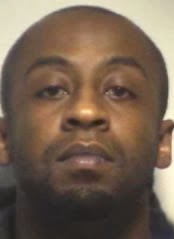
A father has been jailed for his involvement in fraud offences after he had intentions of scamming up to £25000.
Earl George Wisdom (pictured), from Northborough Road, London was caught in possession of personal banking details and a bank card under an associate’s name. Paperwork was recovered from his car with bank details on it that had been supplied by a former bank employee.
The court heard that a sum of £10,000 was transferred from a Bank of Ireland account in two lump sums, but the origin of this money is unknown.
The 31-year-old who has previous convictions involving Class A drugs was arrested before he could withdraw the money from his associate’s bank.
Winchester Crown Court heard that passwords and banking details of two females were stored on his mobile allowing him to withdrawal a combined total of £14000 from their accounts.
Wisdom claimed his role was to transport an unnamed woman to the bank for her to withdraw money under a false identity.
Detective Constable Graham Robson told WINOL that the victims have been reimbursed by Halifax.
Halifax said in a statement: “The security of our service and of our customers’ accounts is absolutely our number one priority. We’re regularly improving our security to prevent fraud.”
Passing sentence Judge Graham Cottle described Wisdom as “thoroughly dishonest” and sentenced him to 15 months in prison.
Wednesday, 25 September 2013
WINOL returns
Back to WINOL
The final year is now amongst us, and we're all back ready to kick start another successful year of WINOL. Together with the second years we have formed a new team, who is ready to embrace new changes and exciting challenges. Personally, I chose to keep my role as chief crime and court reporter as it's the beat I have the most engagement with both in and out of WINOL, and therefore I would like to continue to develop my skills and knowledge within a patch I am most interested in. The Innocence project is also vast approaching which I am extremely eager to begin investigating.New Changes
The biggest change to my role this semester is the development of a crime unit, in previous semesters it has been the solo court reporter but now with a group together we can actively produce a greater amount of content for online and broadcast. An extremely exciting proposal has been offered to us by The Justice Gap will now be working in partnership with Winchester News Online, this is a honourable experience for us as students to produce news reports for a national established website. Weekly we will be in contact with the editor Jon Robins to discuss current criminal affairs, whereby he will commission us to write news reports. Currently the website has a lot of comment analysis and timeless blog posts but the idea with working with WINOL is to adapt a news section offering readers reaction to current breaking stories.

The Justice Gap is an online magazine about the law and justice. It has been running for two years now with the aim to shine a light and expose elements of the justice system that do not receive enough coverage in the mainstream media. It has adopted a particular point of view which is left leaning and liberal - campaigners, lawyers and professionals involved in the law contribute towards writing comment pieces on the site on topics such as human rights, civil liberties, consumer law and miscarriages of justice.
Primarily the site was set up to promote 'access to justice' as there are doubts that the system isn't working; it is there for people who may be out of touch with there rights thus struggling to get justice.
Michael Mansfield QC who is the leading human rights lawyer contributes articles towards the justice gap, which he refers to as "The section of the public too poor to afford a lawyer and not poor enough to qualify for legal aid". David Jessel who was a commissioner for the CCRC is another key figure involved in The Justice Gap who explains it as the difference between law and justice.
In collaboration with The Justice Gap we will also be doing some video interviews with some high profile professionals in the legal field, so keep your eyes peeled - more details to follow soon!
Wednesday, 20 February 2013
Gambling addict scams £50k from hospital

A manager has been jailed for 18 months after fraud investigators found out he had stolen £56,000 from a Hampshire Hospital.
Paul Ball, from Derwent Close, Horndean, was employed by the NHS Trust as a supervisor in the cafeteria of Basingstoke Hospital.
Winchester Crown Court heard that the 49-year-old man was motivated by gaining money to feed his gambling addiction.
Ball was meticulous in the planning of the scam. The first step was to make sure he took the money from the canteen to the cashier office on his own. The rule is that two employers should be present at all times.
Once he was out of view he would take some of the bags of money to his car. Taking steps to make sure he wasn’t seen.
The scam only worked because he took small amounts of money over a period of months.
Nobody noticed the missing money because the paperwork was kept in order.
But eventually workers became suspicious about missing receipts.
They complained to Ball, who took no action. It was then that the fraud investigators stepped in.
Passing sentence Judge Keith Cutler said: “It is very sad that you find yourself before me,” and said that his actions have brought him nothing but “loss and shame”.
Hampshire Hospitals NHS foundation trust said in a statement: “This case demonstrates that the Trust will not tolerate theft and fraud committed. Action is currently being taken to recover the monies that were stolen.”
Wednesday, 13 February 2013
Brother Brawls with Bouncer
A 22-year-old man has been convicted of affray after he punched a bouncer who was trying to get his brother to leave.
Winchester Crown Court heard that Nicholas Lauro, from Glebe Lane, Hartley Wintney, went out with his brothers to Jaxx nightclub in Fleet, October 2011.
When Nicholas’ brother refused to leave the club, the bouncer pushed him away from the door and forced him to the ground.
It was when other bouncers left the club to help their colleague, who was struggling to keep the brother on the ground, that Nicholas Lauro got involved and punched a bouncer. It was all caught on CCTV.
The judge, Miss Recorder Lamb, sentenced him to 200 hours of unpaid work and fined him £300 for prosecution costs. He was further punished by the Pubwatch scheme that banned him from drinking in the Fleet Area.
Friday, 1 February 2013
WINOL Week 2
This week a few stories I was working on fell through, but by the end of the week a joint package Nadine and I was working on made the headlines.
Hampshire Police and Crime Panel Meeting
This week Spence and I went down to the Council Chambers to watch the debate of the preferred Chief Constable. This was an extremely interesting experience, we sat in the press dock and made extensive notes on the councillors questions and responses. This was in preparation for the announcement of the new chief constable.
Court
As usual I went down to court in hope to find a newsworthy story. I began following a breach of sentence regarding a Southampton player who was assaulted, I was present at the court in Novemeber when the suspended sentence was received and was therefore familiar with the case. However, despite my efforts to get in touch with the club and speak to the victim I found there were too many legal issues such as the addresses, which stopped me from progressing and broadcasting it. I knew that it would probably be unlikely that the victim would want to speak to me, but I wanted to try something new this week and try get the angle from the victims point of view. Without it, there was minimal visuals, and therefore decided to axe the story and look for something more creative this week. On my second visit down to court there was reporting restrictions on the case.
By this point, it was Tuesday morning and I was storyless. I tried to do something constructive such as an OOV belt to add an element to the bulletin that we didn't have in the first week.
OOV
Nadine and I got together a few possible ideas for an OOV such as the 200th year anniversary of Pride and Prejudice. She drove us down to Chawton in Alton to visit Jane Austen's House Museum, whereby we got permission to film inside. Unfortuantely a lot of the footage was pretty dark as the lighting was dim inside. But we got many GVs so finding a few shots to use in a 12 second OOV was not a problem. I found that the OOV itself was quite 'promo' for the museum therefore struggled to make it a 'news' story.
An OOV between two was not exactly anything to be proud of, and as a reporter that aims to be in the bulletin every week I felt I had let myself down. But with a call from our news editor Ben, regarding a campaign that was launched and a possible interviewee, I was excited again and ready to produce a package - even if it meant turning the story around and editing it all the morning of the bulletin.
The story was a follow up regarding an accident that happened on Friday where a young boy was hit by a bus. I was luckily walking down the high-street where Spence and I noticed ambulances and police cars. We knew it would be a pretty big story as the police cornered off the area and Press were already down there. I took some photos from the scene of the crime on my iPhone as this was the only device I had at the time, and thinking it would only be a text story I made the mistake of not taking any moving footage. Note to self I am working for TV, always take a video, not just still. It unravelled in the week that a campaign on Facebook was launched in response to the danger zone, therefore we set up an interview with the founder of this campaign: Andy Salter, who was happy to talk to us.
Nadine and I scripted the PTC which we decided she would do as she wanted to gain more experience on screen, whereas I had little experience conducting interviews and therefore wanted to use this opportunity to do so. With the chance to produce a full package, rather then a court report which never has any visuals, I ensured we had some sequence shots so when it came down to editing it we would have plenty of shots to choose from. We also used the stills that was taken on the day of the crime to show what had happened, but the important part was the new update on the story that the market stalls had been closed. Nadine got in touch with the council to investigate what changes they were deciding to make, and therefore found out that had suspended that area of the market for the foreseeable future. She did a walking piece to camera from the area where the market stalls would usually be which visually displayed the difference, she did a great job and it looked really professional. When we got back to the newsroom, we began to edit it together, and realised that the first PTC that she did needed to be re-recorded as we had put pictures over it, and therefore need to script to pictures rather then the other way round. Therefore it was re-scripted and recorded in the Radio studio. We worked well as a team, and was extremely happy with what we produced, we cut it down to a few shots for the headline clip, and we had secured our place as the second top story. Here it is:
Hampshire Police and Crime Panel Meeting
This week Spence and I went down to the Council Chambers to watch the debate of the preferred Chief Constable. This was an extremely interesting experience, we sat in the press dock and made extensive notes on the councillors questions and responses. This was in preparation for the announcement of the new chief constable.
Court
As usual I went down to court in hope to find a newsworthy story. I began following a breach of sentence regarding a Southampton player who was assaulted, I was present at the court in Novemeber when the suspended sentence was received and was therefore familiar with the case. However, despite my efforts to get in touch with the club and speak to the victim I found there were too many legal issues such as the addresses, which stopped me from progressing and broadcasting it. I knew that it would probably be unlikely that the victim would want to speak to me, but I wanted to try something new this week and try get the angle from the victims point of view. Without it, there was minimal visuals, and therefore decided to axe the story and look for something more creative this week. On my second visit down to court there was reporting restrictions on the case.
By this point, it was Tuesday morning and I was storyless. I tried to do something constructive such as an OOV belt to add an element to the bulletin that we didn't have in the first week.
OOV
Nadine and I got together a few possible ideas for an OOV such as the 200th year anniversary of Pride and Prejudice. She drove us down to Chawton in Alton to visit Jane Austen's House Museum, whereby we got permission to film inside. Unfortuantely a lot of the footage was pretty dark as the lighting was dim inside. But we got many GVs so finding a few shots to use in a 12 second OOV was not a problem. I found that the OOV itself was quite 'promo' for the museum therefore struggled to make it a 'news' story.
An OOV between two was not exactly anything to be proud of, and as a reporter that aims to be in the bulletin every week I felt I had let myself down. But with a call from our news editor Ben, regarding a campaign that was launched and a possible interviewee, I was excited again and ready to produce a package - even if it meant turning the story around and editing it all the morning of the bulletin.
The story was a follow up regarding an accident that happened on Friday where a young boy was hit by a bus. I was luckily walking down the high-street where Spence and I noticed ambulances and police cars. We knew it would be a pretty big story as the police cornered off the area and Press were already down there. I took some photos from the scene of the crime on my iPhone as this was the only device I had at the time, and thinking it would only be a text story I made the mistake of not taking any moving footage. Note to self I am working for TV, always take a video, not just still. It unravelled in the week that a campaign on Facebook was launched in response to the danger zone, therefore we set up an interview with the founder of this campaign: Andy Salter, who was happy to talk to us.
Nadine and I scripted the PTC which we decided she would do as she wanted to gain more experience on screen, whereas I had little experience conducting interviews and therefore wanted to use this opportunity to do so. With the chance to produce a full package, rather then a court report which never has any visuals, I ensured we had some sequence shots so when it came down to editing it we would have plenty of shots to choose from. We also used the stills that was taken on the day of the crime to show what had happened, but the important part was the new update on the story that the market stalls had been closed. Nadine got in touch with the council to investigate what changes they were deciding to make, and therefore found out that had suspended that area of the market for the foreseeable future. She did a walking piece to camera from the area where the market stalls would usually be which visually displayed the difference, she did a great job and it looked really professional. When we got back to the newsroom, we began to edit it together, and realised that the first PTC that she did needed to be re-recorded as we had put pictures over it, and therefore need to script to pictures rather then the other way round. Therefore it was re-scripted and recorded in the Radio studio. We worked well as a team, and was extremely happy with what we produced, we cut it down to a few shots for the headline clip, and we had secured our place as the second top story. Here it is:
WINOL 30/1/13
Personally this week I felt WINOL was extremely successful, we had a great range of news stories with a range of both hard and soft news. We had coverage of royalty, crime, court report on bomb hoax, wind farm update, government grants, elderly people, sport and cute animals. Despite the slight delay in broadcasting the bulletin I thought production did really well, and the bulletin flowed nicely and looked professional. Harry Parkhill our news anchor also did a brilliant job of presenting, looking extremely comfortable, something I aspire to be able to do myself in the future. Watch the full bulletin below:
Monday, 7 January 2013
His name is Evil: Levi Bellfield
Over the holidays I have been saturated in crime investigations, developing upon my patch as a crime and court reporter last semester. As well as watching documentary's such as 'Evil up close' and 'When life means life' on the Crime Channel, I have been following a book titled 'Life means life' by Nick Appleyard, covering the minority of cases where prisoners will die behind bars; such as the likes of Anthony Arkwright, Ian Brady, Rose and Fred West, Steve Wright, Dennis Nilsen and closer to home: Levi Bellfield.
This was the most astonishing of all, as Levi Bellfield, similarly to I was born in Isleworth. He attacked woman in the area I have lived in my entire life, nothing like this has ever happened here before, and until now I have never been able to put a name or face to my dads warning "there's a hammer man on the loose", he would say, at a time when I was only aged 11 and starting secondary school. It was devastatingly horrible to know that something as big as murder had happened virtually on my door step, only round the corner from where I went to school, and where I live.
Levi Bellfield, was one of six children. At the age of eight his father died of a heart attack. In his early teens he was showing signs of sadistic and abnormal tendencies. At the age of 13, he tortured and killed his sister’s pet rabbit, and school friends recall a rumour that he tried to have sex with the animal.
He was known as the 'The Hammer Man', in my area, but tabloids branded him 'The Bus Stop Killer', because his trademark would be to wait at bus stops or follow buses late at night, targeting blonde vulnerable girls who were alone. He would approach them and offer them lifts, sex, drugs or drink, and those who would reject his offers, faced the brunt of his raging revenge.
In 2011, Bellfield was found guilty of killing school-girl Milly Dowler, aged 13, who went missing in Walton-on-Thames on her way home from school in March 2002. Her body was found six months later in woodlands in Hampshire.
In February 2003, LEVI, whose name is an anagram of EVIL beat Marsha McDonnell aged 19, over the head with a hammer, when she was feet away from her home in Hampton. He had followed her bus in his van, and after attacking her, left her to die on the pavement. In May 2004 he stalked 18 year old student Kate Sheedy who got off a bus in Isleworth, Bellfield ran her over as she was crossing the road. He then reversed and ran over her again to ensure she was dead, but she survived after managing to make a call to the emergency services. She was the star witness to the prosecution service, as she lived to tell the tale.
In August 2004, his next innocent target was Amelie Delagrange, who got off at the wrong bus stop. Bellfield approached her and as she refused to talk to him, he responded with a brutal attack; it didn't take much for him to switch from nice to nasty. As the 22 year old went to cross my local cricket pitch known as Twickenham Green to get home, he beat her over the head three times with a hammer. From that day onwards, the local area was petrified and stunned by what had happened, and many woman were fearful that he would strike again. While Bellfield was on remand in Belmarsh Prison, in South East London, he confided in Paul Jarvis and admitted to killing her after she refused his offer of Cocaine.
Bellfield was even capable of turning on his friends, in 2004 he attacked again, this time hitting his friend Peter Rodriguez over the head with a hammer three times and stabbing him in the stomach and kneecaps with a screwdriver.
Bellfield has eleven children, by five different women. His ex-girlfriend of three years Johanna Collins spoke about how he would return home, from work as a nightclub bouncer, and boast about the girls he would of raped that night, referring to them as “another little slut” that he had in the back of his car. He was in the car clamping business, owning four different cars, one of which was a Toyota Previa people carrier that had blacked out windows. He would keep a mattress and blankets in the back of his car which would come in handy when he lured drunken naive girls into his trap. Those who ignored his advances were sometimes drugged and raped. Bellfield was fuelled by steroids and cocaine, he believed he was above the law, and cleverly disposed of his vehicles and clothes that were used during the attacks. He also boasted to work colleagues how he was shave his entire body to avoid leaving traces of DNA; he believed he was “untouchable”. However, he wasn't clever enough to consider CCTV from buildings and buses, which had footage of all his vehicles, placing him at the scene of the crimes. He would order his ex to scrub the cars out to remove any traces of what he had done. Johanna Collins mentioned how she had found Bellfield’s stalking kit in the garage one day, inside it was a coat, a bobble hat and a magazine. The coat was heavy on one side, she discovered that the lining in the left hand pocket had been cut out so that his hand could go right the way down to his hunting knife. She realised that the bobble hat was a full face balaclava, and all the models in the magazine with blonde hair had been slashed up. When faced with the discovery he flew into a rage shouting “I f**king hate blondes, they should all f**king die”. Becky Wilkinson who was the mother to four of his children said how the life tariff had made her feel safe for the first time in years; as he would hit her and rape her.
 |
| CC Attribution - Author: Synikalle |
Levi Bellfield, was one of six children. At the age of eight his father died of a heart attack. In his early teens he was showing signs of sadistic and abnormal tendencies. At the age of 13, he tortured and killed his sister’s pet rabbit, and school friends recall a rumour that he tried to have sex with the animal.
He was known as the 'The Hammer Man', in my area, but tabloids branded him 'The Bus Stop Killer', because his trademark would be to wait at bus stops or follow buses late at night, targeting blonde vulnerable girls who were alone. He would approach them and offer them lifts, sex, drugs or drink, and those who would reject his offers, faced the brunt of his raging revenge.
In 2011, Bellfield was found guilty of killing school-girl Milly Dowler, aged 13, who went missing in Walton-on-Thames on her way home from school in March 2002. Her body was found six months later in woodlands in Hampshire.
In February 2003, LEVI, whose name is an anagram of EVIL beat Marsha McDonnell aged 19, over the head with a hammer, when she was feet away from her home in Hampton. He had followed her bus in his van, and after attacking her, left her to die on the pavement. In May 2004 he stalked 18 year old student Kate Sheedy who got off a bus in Isleworth, Bellfield ran her over as she was crossing the road. He then reversed and ran over her again to ensure she was dead, but she survived after managing to make a call to the emergency services. She was the star witness to the prosecution service, as she lived to tell the tale.
In August 2004, his next innocent target was Amelie Delagrange, who got off at the wrong bus stop. Bellfield approached her and as she refused to talk to him, he responded with a brutal attack; it didn't take much for him to switch from nice to nasty. As the 22 year old went to cross my local cricket pitch known as Twickenham Green to get home, he beat her over the head three times with a hammer. From that day onwards, the local area was petrified and stunned by what had happened, and many woman were fearful that he would strike again. While Bellfield was on remand in Belmarsh Prison, in South East London, he confided in Paul Jarvis and admitted to killing her after she refused his offer of Cocaine.
Bellfield was even capable of turning on his friends, in 2004 he attacked again, this time hitting his friend Peter Rodriguez over the head with a hammer three times and stabbing him in the stomach and kneecaps with a screwdriver.
Bellfield has eleven children, by five different women. His ex-girlfriend of three years Johanna Collins spoke about how he would return home, from work as a nightclub bouncer, and boast about the girls he would of raped that night, referring to them as “another little slut” that he had in the back of his car. He was in the car clamping business, owning four different cars, one of which was a Toyota Previa people carrier that had blacked out windows. He would keep a mattress and blankets in the back of his car which would come in handy when he lured drunken naive girls into his trap. Those who ignored his advances were sometimes drugged and raped. Bellfield was fuelled by steroids and cocaine, he believed he was above the law, and cleverly disposed of his vehicles and clothes that were used during the attacks. He also boasted to work colleagues how he was shave his entire body to avoid leaving traces of DNA; he believed he was “untouchable”. However, he wasn't clever enough to consider CCTV from buildings and buses, which had footage of all his vehicles, placing him at the scene of the crimes. He would order his ex to scrub the cars out to remove any traces of what he had done. Johanna Collins mentioned how she had found Bellfield’s stalking kit in the garage one day, inside it was a coat, a bobble hat and a magazine. The coat was heavy on one side, she discovered that the lining in the left hand pocket had been cut out so that his hand could go right the way down to his hunting knife. She realised that the bobble hat was a full face balaclava, and all the models in the magazine with blonde hair had been slashed up. When faced with the discovery he flew into a rage shouting “I f**king hate blondes, they should all f**king die”. Becky Wilkinson who was the mother to four of his children said how the life tariff had made her feel safe for the first time in years; as he would hit her and rape her.
The day before Bellfield was arrested, the police followedhis car. He pulled up and spoke to two young girls at a bus stop. The girlslater told the police how he had offered them a lift, and that he had askedtheir age. When he received a response of 14, he said “you must be virgins – Ibet you are nice and tight”, he laughed as he drove off.
At the time of his arrest, mother of three of his children Emma Mill’s was living with him. At around 4/5am, 30 policemen armed with guns, and dogssurrounded his house in West London . At that time he was in bed, Mill’s said how she had never seen him look so scaredbefore. He looked at her and said “I’m sorry” and then hid in the loft. Policefound him naked, crouched behind a roll of insulation, as he tried to hidehis private parts which had shrunk due to steroid abuse.
Bellfield was convicted on 25th February 2008with double murder and the attempted murder of Kate Sheedy. Later in 2011, hewas found guilty of the murder of Milly Dowler. Police suspect he is guilty ofmany more attacks on women, linking him to potentially 20 further offences.Officers are still working through cases. After trial, it came to light thatBellfield’s first girlfriend when he was 12 years old, was murdered in the 1980’s, her name was Patsy Morris, she was only aged 14. This is just one of many crimes that police will bequestioning him on.
Bellfield refused to attend court, blaming the tabloids for their adverse accounts about him, every national tabloid had the verdict on their front page the next morning. The Sun's headline was "HE KILLED MILLY TOO". Surviving victim Kate Sheedy described him as a "complete coward" for not showing his face in court. Sentencing Bellfield in his absence Judge Mrs Justice Rafferty said: "You have reduced three families to unimagined grief. What dreadful feelings went through your head as you attacked and in two cases, snuffed out a young life is beyond understanding. You will not be considered for parole and must serve your whole life in prison." DCI Collin Sutton who lead the investigation said outside court "Levi Bellfield is a predator, who preyed on women over a period of time. He targeted his victims at random, attacking those much smaller and weaker than him. Only he knows why he did it."
References
Appleyard, N. (2009) LIFE MEANS LIFE. London: John Blake Publishing Ltd, p.33-40.
Evil Up Close - His name is Evil: Levi Bellfield (n.d.) [TV programme] Crime and Investigation network.
Thursday, 3 January 2013
What to expect with Court Reporting
Court reporting is known as one of the toughest reporting jobs in Journalism. You enter a place where you encounter the highest and the lowest of society; the professionals and the suspected criminals.
As a court reporter you have to be thick skinned. You have to expect to hear all the gory details of the crime at hand, without letting it faze you. It is extremely hard at times, to be in such an intense environment hearing the summing up amongst the defendant’s family and friends, but your main focus has to be on getting down all the details; ensuring your facts are exactly how you hear them in court. This is where shorthand comes in handy, it does speed things up if you can do it, but if you’re a fast writer longhand works just as well.
Your notepad is your bible, it’s important to keep hold of everything you write in court as backup, in-case somewhere down the line someone tries to sue you for libel. If you have the facts written down about what was said in court, then you have a Qualified Privilege defence.
Entering court initially is daunting, passing by security, and anxiously sitting outside the court rooms twiddling your thumbs until the next case is called. Court is an extremely isolated and lonely place, especially as a reporter when you go alone, but, when you get a good story you know your news editor will want it gives you the drive. You can be sitting in court for endless hours at a time, and still not find a good story that you can legally report on, so time and patience is crucial. Be sure to know your media law, in particular about defamation and the risks of contempt of court.
Writing the script is the next challenge you are faced with. For TV it needs to remain simple and to the point, summarising all the key facts in a way that is fast, accurate and fair. The most important part is to legally identify the defendant with their name, age and address, ensuring it is all spelt correctly for print - don’t be afraid to ask people how it’s spelt! As Journalists, it's sometimes worth playing dumb. This way you have positively identified them, and at no risk of defaming someone else, who could potentially sue you for a large sum of money!
When you are in court, you will hear a lot of jargon from the Defence, Prosecution and Judge, you do not need to worry about this, just get down everything you understand, in particular any quotes from the Judge. Contacts will rescue you when in doubt, for instance, Court Listings can confirm identification, and the Crown Prosecution Service can confirm details on the case. These are the people you will work closely with; you have to be confident and build a friendly relationship with professionals that you wouldn't normally speak to. In particular, the police, you need to know the name of the officer in charge of the case to see if they can give you any photographs or footage that they may have, in addition, with their name you can fill out a convicted photo request form to get a mug shot. Often the officer in charge is present at the court so if you go up to them and introduce yourself they can help you, either that or call the police headquarters and get in touch that way. There will be countless times you will be passed on to different departments, and feel as though you are not getting anywhere, but maintain persistence, and chase up calls, don’t wait for them to contact you back, because it’s likely that they won’t.
A good TV report has to be visual, court reports can be extremely dull, and it’s a challenge to make it more visually appealing for the viewer. Photographic features which are ideal to illustrate your report are a mug shot of the defendant, police photographs if there is evidence to be seen, a piece to camera on location and cutaway shots of the scene, if you can get there. Regularly you see reports whereby the reporter is stood outside the law courts, this can be visually mundane, so depending upon the time scale you have if you can get to the scene of the crime, it lifts the piece, adding context and colour.
We are seen as the nosy hacks of society, but you are there to do your job, so don’t let any evil stares, or off-putting glares put you off. Don’t be shy to speak to people, they are your richest source, just be sure to be dressed smart, and act professionally in court, and in return you will be treated in a respectful manner. Although you may feel as though you are intruding upon peoples personal lives, it is called a public gallery for a reason, no one can stop you from going, and it’s a reporter’s job to share what is the public's interest.
Here are some examples of the work I carried out as a Court Reporter -
As a court reporter you have to be thick skinned. You have to expect to hear all the gory details of the crime at hand, without letting it faze you. It is extremely hard at times, to be in such an intense environment hearing the summing up amongst the defendant’s family and friends, but your main focus has to be on getting down all the details; ensuring your facts are exactly how you hear them in court. This is where shorthand comes in handy, it does speed things up if you can do it, but if you’re a fast writer longhand works just as well.
Your notepad is your bible, it’s important to keep hold of everything you write in court as backup, in-case somewhere down the line someone tries to sue you for libel. If you have the facts written down about what was said in court, then you have a Qualified Privilege defence.
Entering court initially is daunting, passing by security, and anxiously sitting outside the court rooms twiddling your thumbs until the next case is called. Court is an extremely isolated and lonely place, especially as a reporter when you go alone, but, when you get a good story you know your news editor will want it gives you the drive. You can be sitting in court for endless hours at a time, and still not find a good story that you can legally report on, so time and patience is crucial. Be sure to know your media law, in particular about defamation and the risks of contempt of court.
Writing the script is the next challenge you are faced with. For TV it needs to remain simple and to the point, summarising all the key facts in a way that is fast, accurate and fair. The most important part is to legally identify the defendant with their name, age and address, ensuring it is all spelt correctly for print - don’t be afraid to ask people how it’s spelt! As Journalists, it's sometimes worth playing dumb. This way you have positively identified them, and at no risk of defaming someone else, who could potentially sue you for a large sum of money!
When you are in court, you will hear a lot of jargon from the Defence, Prosecution and Judge, you do not need to worry about this, just get down everything you understand, in particular any quotes from the Judge. Contacts will rescue you when in doubt, for instance, Court Listings can confirm identification, and the Crown Prosecution Service can confirm details on the case. These are the people you will work closely with; you have to be confident and build a friendly relationship with professionals that you wouldn't normally speak to. In particular, the police, you need to know the name of the officer in charge of the case to see if they can give you any photographs or footage that they may have, in addition, with their name you can fill out a convicted photo request form to get a mug shot. Often the officer in charge is present at the court so if you go up to them and introduce yourself they can help you, either that or call the police headquarters and get in touch that way. There will be countless times you will be passed on to different departments, and feel as though you are not getting anywhere, but maintain persistence, and chase up calls, don’t wait for them to contact you back, because it’s likely that they won’t.
A good TV report has to be visual, court reports can be extremely dull, and it’s a challenge to make it more visually appealing for the viewer. Photographic features which are ideal to illustrate your report are a mug shot of the defendant, police photographs if there is evidence to be seen, a piece to camera on location and cutaway shots of the scene, if you can get there. Regularly you see reports whereby the reporter is stood outside the law courts, this can be visually mundane, so depending upon the time scale you have if you can get to the scene of the crime, it lifts the piece, adding context and colour.
We are seen as the nosy hacks of society, but you are there to do your job, so don’t let any evil stares, or off-putting glares put you off. Don’t be shy to speak to people, they are your richest source, just be sure to be dressed smart, and act professionally in court, and in return you will be treated in a respectful manner. Although you may feel as though you are intruding upon peoples personal lives, it is called a public gallery for a reason, no one can stop you from going, and it’s a reporter’s job to share what is the public's interest.
Here are some examples of the work I carried out as a Court Reporter -
Full YouTube Channel - http://www.youtube.com/user/024christina
Subscribe to:
Posts (Atom)